Clinical Study for Chemicals
Moline et al. [Moline JM, et al., (2000). environmental health perspective. 108:803-13.] observed that paternal exposure to solvents, pesticides, and metals in animals and humans was associated with the incidence of spontaneous abortion, low birth weight, birth defects, childhood leukemia, brain tumors, changes in male-female ratios, and others Points related to growth and development has been associated. Certain occupations—occupations in the rubber, petroleum, and agrochemical industries, painters, welders, and janitors—were considered particularly harmful to men’s reproductive health.
Males are particularly vulnerable to toxin-induced damage because, unlike the ovary, the testis is characterized by a very high rate of cell proliferation, with millions of sperm produced daily. In addition, the progenitor stem cells undergo a highly complex cellular differentiation with specific steps that are known to be highly vulnerable to certain types of chemical exposures.
The most well-known toxins that have negative effects on sperm DNA include DDT and PCB (Hauser R. (2006) The environment and male infertility: recent research on emergen chemicals and semen quality. Semin Reprod Med vol 24 156-157] , Pesticides (Swan SH, Kruse RL, Liu F, Barr DB, Drobnis EZ, Redmon JB, Wang C, Brazil C, Overstreet JW; Study for Future Families Research Group. (2003) Semen quality in relation to biomarkers of pesticide exposure. Environ Health Perspect Sep;111:1478-84] and herbicides (2, 4-D, alachlor and atrizine) Other chemicals including styrene (used in the manufacture of plastics, rubber and resins, chemical additives, personal care products and prescription drugs). suspected of causing sperm DNA damage.
Another potential source of environmental toxins are phthalates, which are used to improve flexibility in a variety of plastic-like products. They are also found in nail polish, flooring and adhesives, and a range of personal care products. Hauser et al. (Hau Ser R, Meeker JD, Singh NP, Silva MJ, Ryan L, Duty S, Calafat AM. (2007) DNA damage in human sperm is related to urinary levels of phthalate monoester and oxidative metabolites. Hum Reprod. 22(3):688-95) found a positive association with sperm DNA damage from monoethylphthalate (MEP) exposure in 379 men attending a fertility center. In pioneering studies, the SCSA test showed a very high correlation between the dose of many toxins and mouse sperm DNA fragmentation.
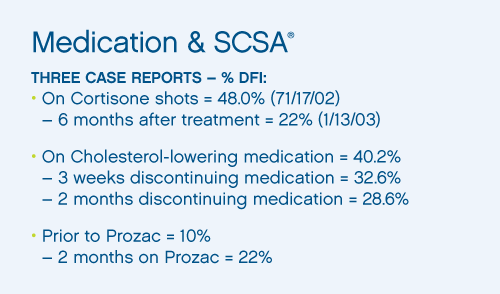
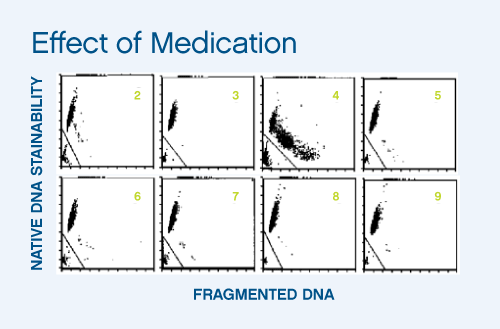
A recent study by the research group of Dr. Peter Schlegel raised major concerns about sperm DNA fragmentation in men prescribed antidepressant SSRIs, in this case Paxil. Men who had an average %DFI (by Tunel test) of 12% experienced an increase to 30% after two months of drug treatment. Given that the Tunel and SCSA data are similar but not necessarily identical, the 30% DPI is the threshold for “clinical concern”. Therefore, men on SSRIs should have an SCSA test before trying to conceive. At the doctor’s direction, the drug can be discontinued while contemplating natural conception; or to freeze seed samples for later use. The %DFI should return to pre-medication levels within a month or two.
Steroids: Steroids can interfere with the normal development of healthy sperm. For example, cortisone injections (1) in the case of back pain can cause a sharp increase in sperm DNA fragmentation that goes far beyond the clinical threshold of 30%. Fortunately, this effect normalizes within a month; Therefore, wait at least that long before attempting to conceive, especially costly IVF/ICSI procedures.
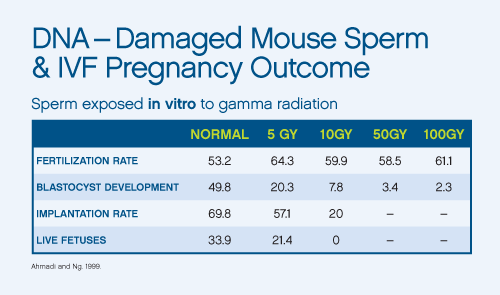
Radiation: Radiation that damages the testicles negatively affects the production of healthy sperm. In mouse model systems, such low doses (25 RAD) caused a significant increase in % DFI.
Clinical Study for Mutagens
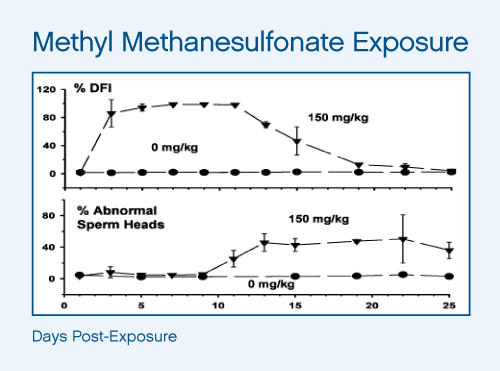
Mutagens (causing DNA mutations) have been shown to increase DNA fragmentation. Mutagens are used to treat cancer patients (mutagens are designed to kill cancer cells and damage other cells in the body as little as possible). Furthermore, they are used as chemicals in industry. An example is methyl methanesulfonate. One study showed that three days after exposure to the chemical, sperm DNA fragmentation occurred in all epididymal mouse sperm. Embryo death occurs in matings with males exposed to MMS. So the sperm with fragmented DNA fertilized the eggs and the embryo implanted. However, the serious DNA damage did not allow the embryo to survive.
Clinical Study for Pesticides
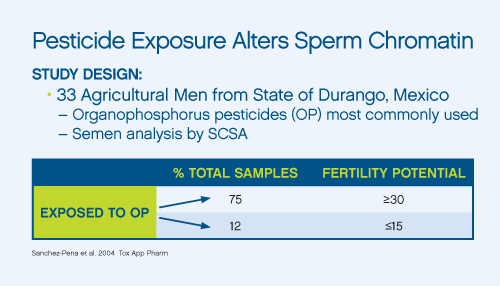
Exposure to certain pesticides can lead to increased sperm DNA fragmentation. In Villa Juarez, Durango State, Mexico, nearly three quarters of farmers exposed to organophosphorus pesticides had DFI levels greater than 30% (Sanchez-Pena et al. 2004).