
For Patients
Answers to the most frequently asked questions about the SCSA® test and sperm DNA fragmentation.
The SCSA test determines the stability of sperm DNA using the DFI (DNA Fragmentation Index)
In particular, couples who have wanted to have children for a long time and/or couples who have had negative outcomes after several treatment cycles benefit from the test.
It can help to achieve a successful pregnancy as directly as possible.
Frequently asked questions
Below you’ll find answers to the questions we get asked the most
What is IUI/IVF/ICSI?
IUI/IVF/ICSI briefly explained
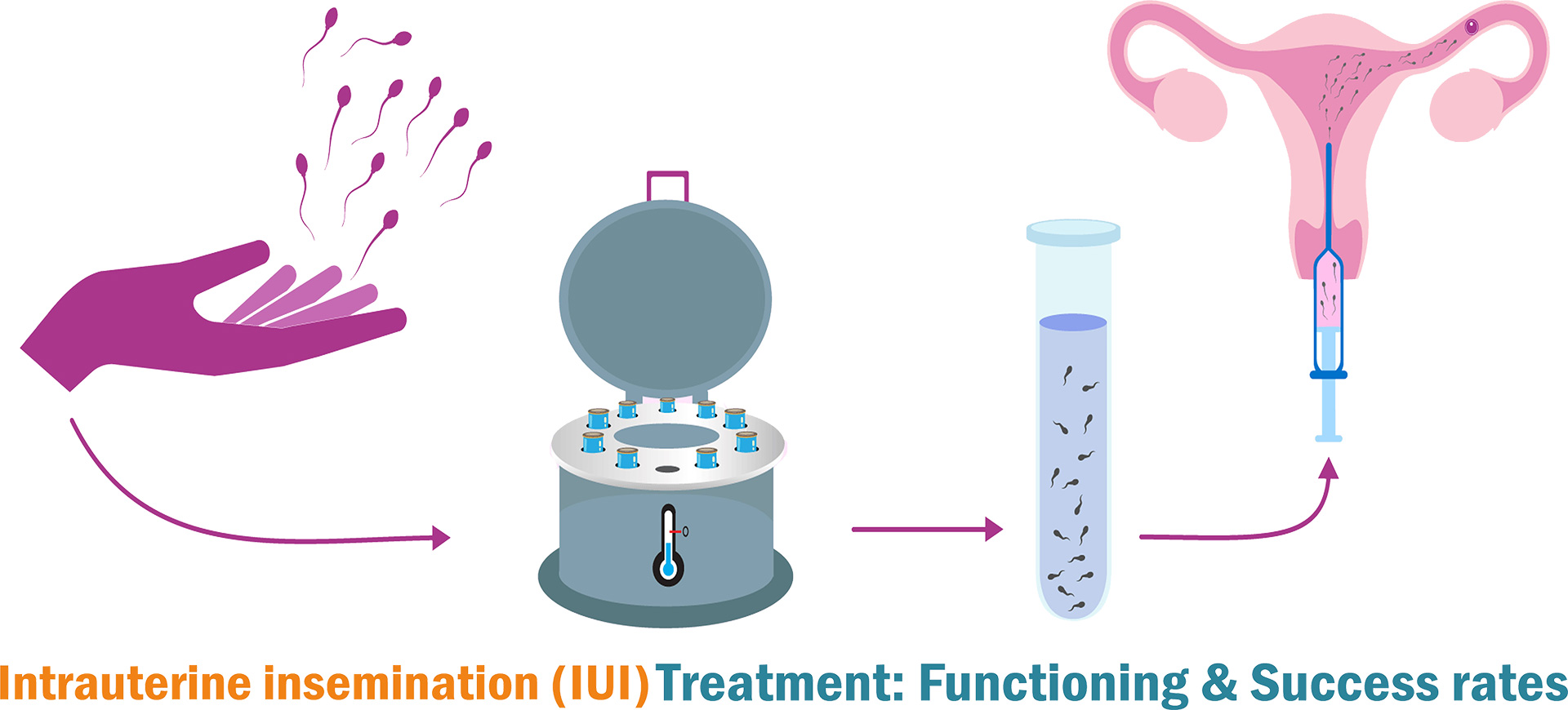
IUI = intrauterine insemination
The IUI is usually the first step in fertility treatment and is aimed at, for example, in couples with unexplained infertility. The ejaculate is processed in the laboratory and placed in the uterus with a catheter. From there, the sperm swim to the fallopian tube to fertilize an egg.
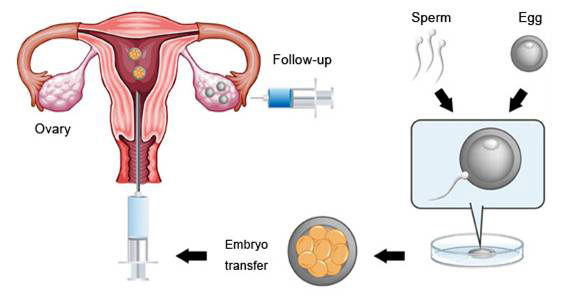
IVF = in vitro fertilization
In IVF, the fertilization of sperm and egg takes place outside the body. For fertilization, egg cells and prepared sperm are put together in a Petri dish. After successful fertilization, the embryo(s) are transferred to the uterus to implant.
IVF is used, for example, in the case of blocked fallopian tubes or in the absence of a pregnancy after previous IUI treatments.
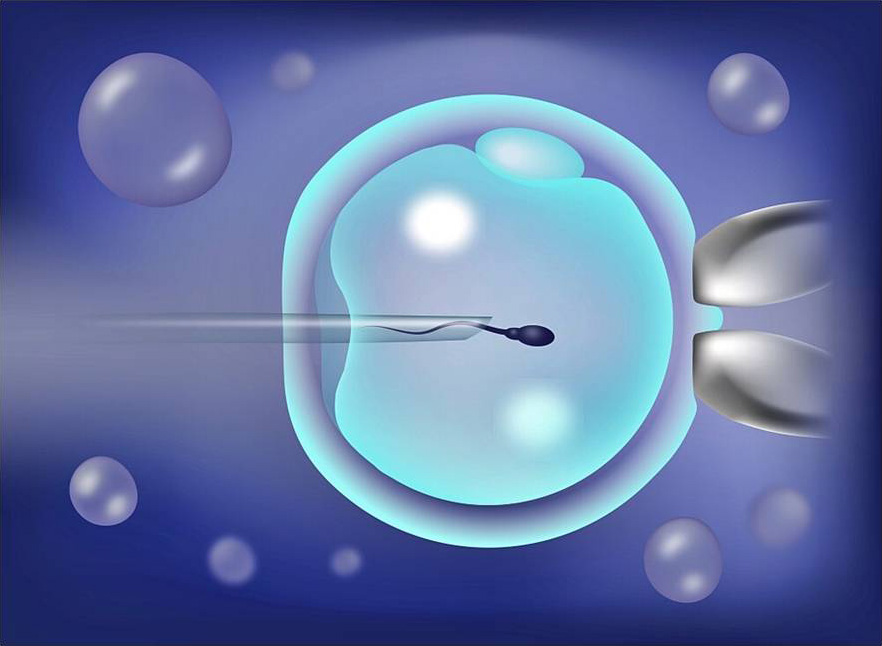
ICSI = intracytoplasmic sperm injection
In ICSI, the fertilization of the sperm and egg takes place outside the body. The main difference from IVF is that the fertilization of the oocytes is carried out under the microscope by selecting sperm and injecting them directly into the oocytes. After successful fertilization, the embryo(s) are transferred to the uterus. Indications for ICSI are, for example, limited semen parameters and absent pregnancies after previous IVF treatments.
What is Sperm DNA Fragmentation?
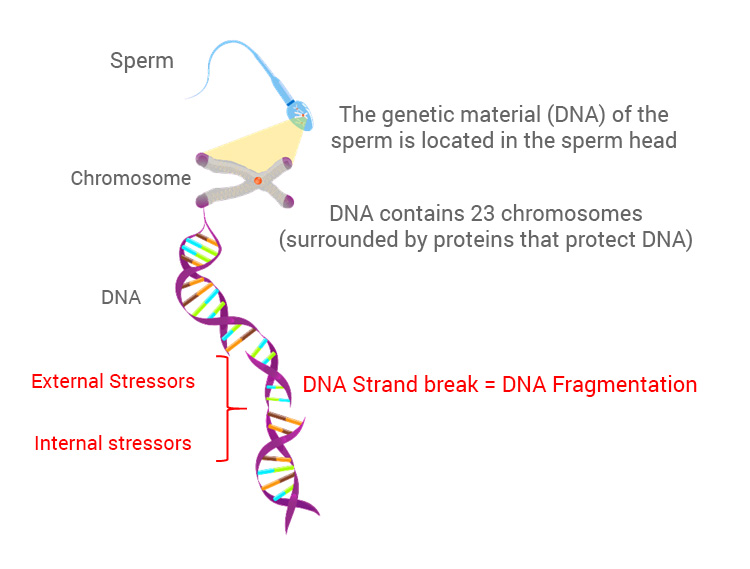
Depending on the stability of the DNA , different stress factors (see Causes) can cause damage to the sperm DNA , which is referred to as “sperm DNA fragmentation”.
What is the SCSA test?
The SCSA test is used to assess the quality of the sperm, which is of great importance for normal fertilization of the egg cell, undisturbed embryo development and a successful pregnancy.
The SCSA® test measures:
DFI (DNA Fragmentation Index) :
The DNA Fragmentation Index (DFI) is the measure of sperm DNA fragmentation and an indicator of sperm quality.
A low DFI (<15%) indicates stable sperm DNA .
A high DFI (>25%) indicates unstable/brittle sperm DNA that is sensitive to stimuli and consequently easily damaged. The damage in sperm can lead to impaired embryo development or repeated miscarriages after fertilization of the egg.
HDS (High DNA Stainability Cells): Percentage of immature sperm
Mature sperm play a major role in the fertilization of the egg cell, among other things.
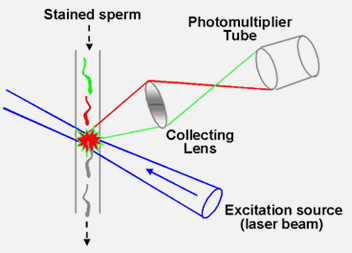
The SCSA® test is performed using a laser-based device called a flow-cytometer which measures 250 sperm/second. The test result is based on the measurment of around 10,000 sperm.
The quality of the sperm is evaluated with the parameters mentioned (DFI and HDS) and can influence the further course of your fertility treatment. Depending on the outcome of the test, special treatment options can be sought to get one step closer to a successful pregnancy.
Who is the SCSA test suitable for?
SCREENING TEST : Particularly suitable for couples with a long-awaited desire to have children
UNSUCCESSFUL IUI/IVF/ICSI ATTEMPTS
REPEATED MISSORS
POOR EMBRYO DEVELOPMENT AND QUALITY
UNEXPLAINED BARRENESS: Couples who want to have children and have unremarkable diagnostic tests
MEN PRONE TO HIGH OXIDATIVE STRESS:- > 40 YEARS
- STRESSING LIFESTYLE
- SMOKER
- DIABETIC
- CHRONIC DISEASES
- EXPOSURE TO TOXINS
- TAKING PRESCRIPTION MEDICATIONS
- PAST CANCER TREATMENTS
- ABNORMAL SPERM GRAPH FINDINGS
- ANDROLOGICAL DISEASES
- PAST UROGENITAL INFECTIONS
- VARICOCELE (varicose veins in the scrotum)
Is a classic semen analysis (spermiogram) sufficient for treatment planning?
A classic spermiogram is the basis for male fertility diagnostics.
Checked:
sperm count
sperm motility
Sperm morphology
BUT: No measurement of sperm quality (degree of DNA fragmentation)
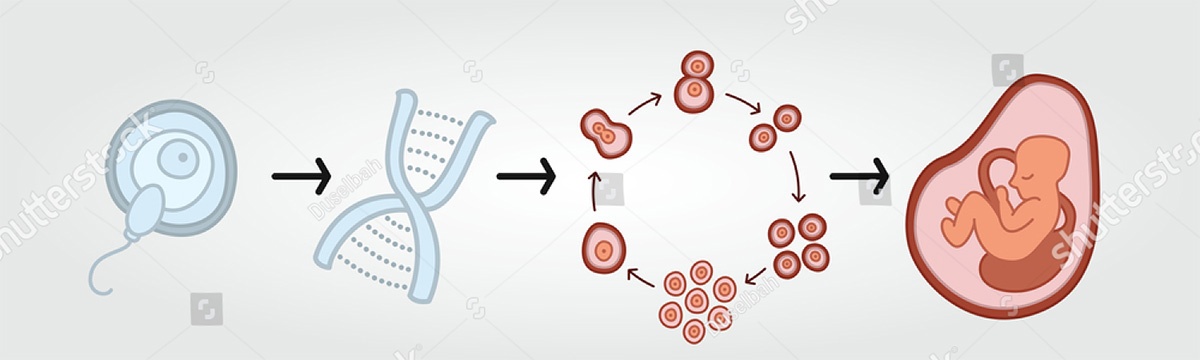
After all, it is the sperm DNA that influences the development of the embryo and the outcome of the pregnancy
What is a normal finding?
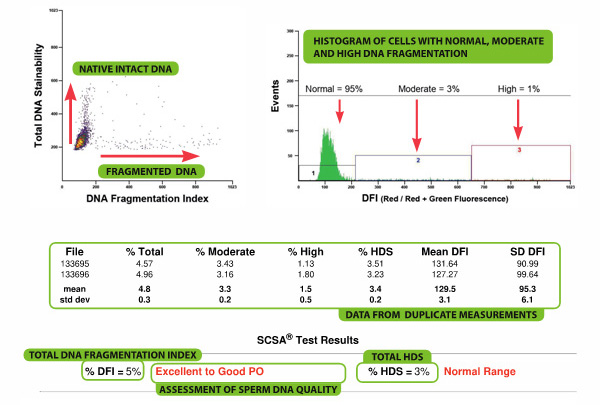 Assessing sperm DNA quality
Since DFI and HDS are within the normal range, pregnancy is possible naturally or by insemination (ignoring partner factors affecting fertility)
That means the DNA of the sperm shows a high stability
What is a conspicuous finding?
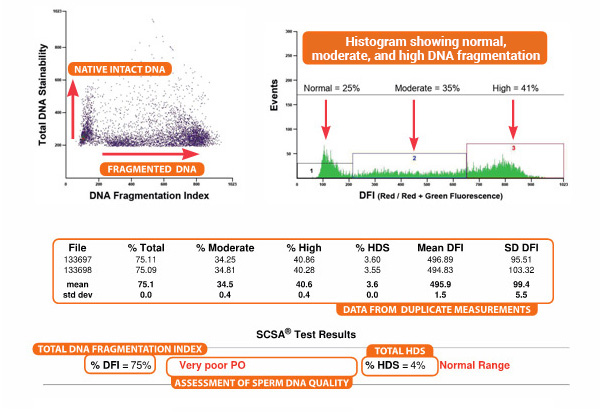
The DFI is greatly increased. This means that the sperm DNA is very fragile and tends towards DNA fragmentation
Stabilization of DNA can be achieved by:
- Medical intervention
- Change of lifestyle
It may be necessary to switch from IUI to IVF/ICSI to increase the chances of a positive pregnancy outcome
Why SCSA?
- Gold standard test for sperm DNA fragmentation
- More than 25 years of experience
- More than 40,000 samples analyzed
- Extensive research in different countries
- The most standardized test
- No variability between international laboratories (objective)
- Robust and comparable results
- 10,000 analyzed sperm per sample – more accurate representation of the semen sample
- Each test is quality checked internally and externally
- Internationally standardized test
How much does the test cost?
Please speak with your treating physician regarding the cost of the test. It is currently not covered by insurance.
The transport of your sample to our laboratory is free of charge.
For DFI values >30%, we offer you a second free control test, which should normally take place 3 months after the first test.
Where can I have the test done?
Please contact us for the cost of the test. It is currently not covered by insurance.
Sending the samples to our laboratory is free of charge.
For DFI values >30%, we offer a second free control test, which should normally take place 3 months after the first test.
Do you have questions about the SCSA® test?
We advise patients and clinics personally – confidential and without obligation.