
For Doctors
SCSA® – the gold standard test for sperm DNA fragmentation. Information on indications, sample shipping and interpreting results.
SCSA® Diagnostics can be of great importance for family planning.
SCSA Diagnostics is the pioneer in sperm DNA analysis, leveraging established research and ongoing clinical studies for over 25 years to perform one of the most advanced sperm DNA fragmentation tests available.
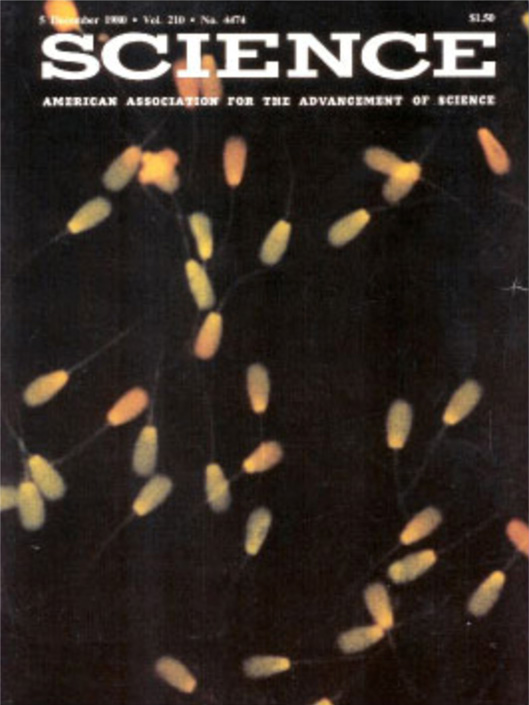
The development of the SCSA test was presented in the renowned journal Science in December 1980.
Note that there are some labs that offer a SCSA-like test. However, it is not the same precision SCSA® test.
- Gold standard test for sperm DNA Fragmentation
- More than 40,000 samples analysed
- The most standardized test
- Objective test
- Each test is quality checked internally and externally
Frequently asked questions
Why do we measure DNA fragmentation?
The diagnosis of male infertility is based on the evaluation of conventional semen analysis, which is based on the criteria of the World Health Organization (WHO 6). However, an increasing number of studies have highlighted the problems associated with this methodology due to the lack of predictive, validated semen parameter thresholds for assisted reproductive technology (ART) success. (van der Steeg et al., 2011; van Weert et al., 2008). Conventional semen analysis examines features of sperm function but does not fully address the functional competence of spermatozoa. A fundamental role in determining sperm competence is currently attributed to DNA integrity. New tests to analyze sperm DNA fragmentation (sDF) are strongly advocated (Shamsi et al., 2011).
Fragmentation of sperm DNA is one of the most important paternal causes of repeated reproductive failure. About 20-30% of men who attend a fertility clinic have a level of sperm DNA fragmentation that can lead to pregnancy failure.
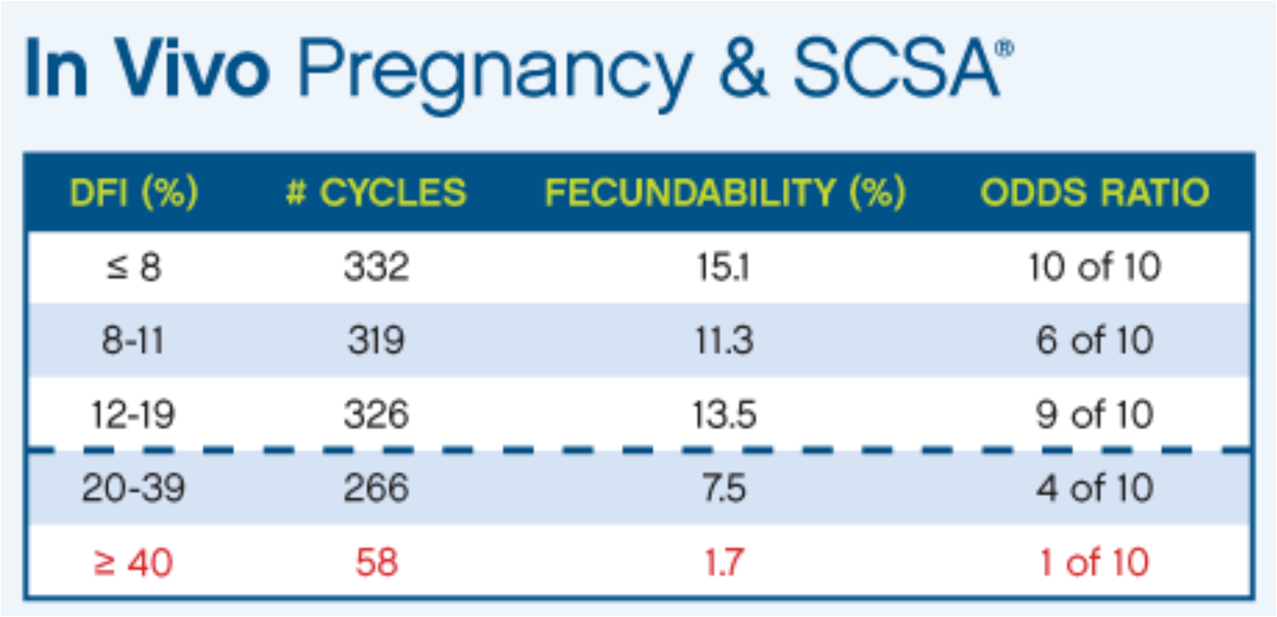
Spano et al. 2000 The dashed line shows the clinical threshold for sperm DNA fragmentation and pregnancy chances
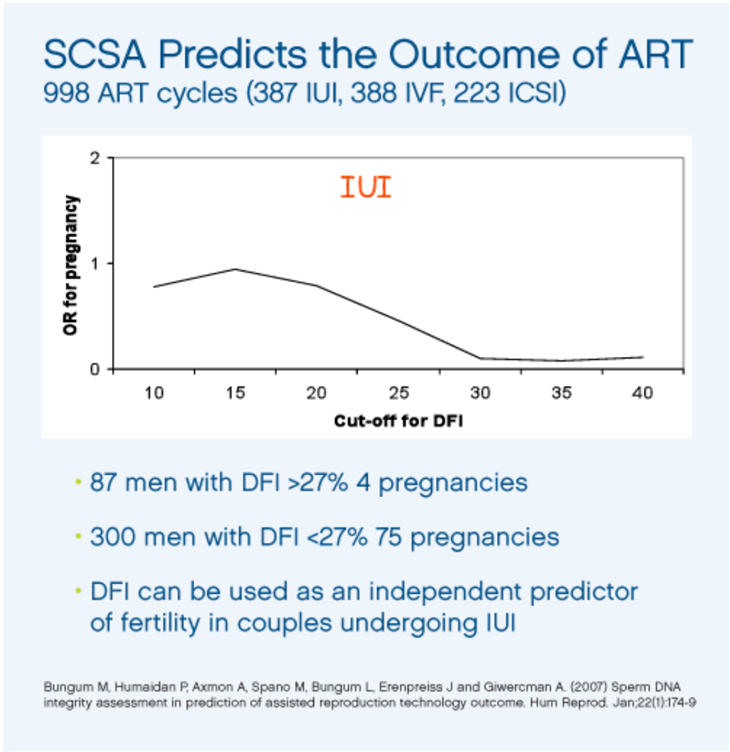
Some authors have published that semen samples containing more than 27-30% sperm with DNA fragmentations (DNA Fragmentation Index, %DFI) are 7-10 times less likely to get pregnant through intercourse or IUI, and one around 1.5 -2.0 times lower chance through IVF/ICSI
Giwercman A et al. (2009 in press, Int. J. Androl) included 137 men from couples with proven infertility with no known maternal factors and 137 men with proven fertility
In men with normal semen parameters (sperm concentration, motility and morphology), the risk of infertility was increased 5-fold with DFI values above 20%.
However, if any of the semen parameters were abnormal, the risk of infertility was increased 16-fold even with DFI values above 10%
The authors concluded that “DFI is a predictor of the likelihood of natural conception, even when classic semen parameters are within the normal range. The SCSA analysis complements treatment planning for couples with proven infertility.”
What is Sperm DNA Fragmentation?
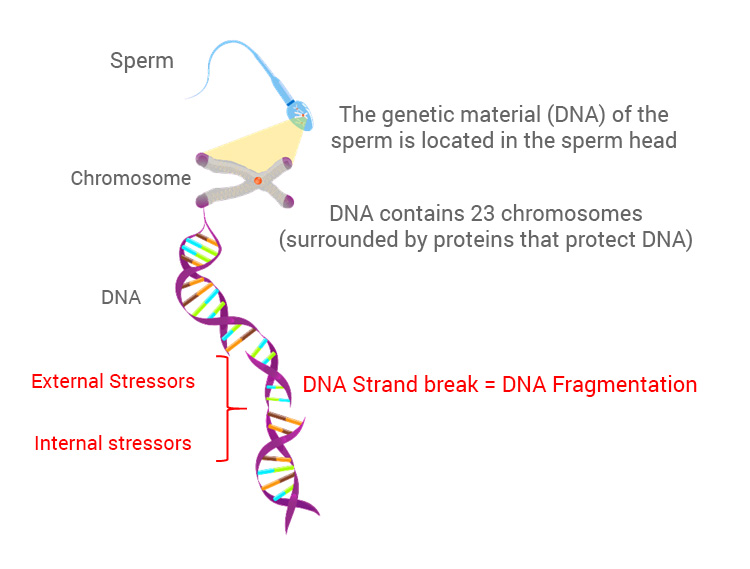
The integrity of sperm DNA is continually challenged by endogenous and exogenous factors, although various mechanisms for repairing and protecting DNA from damage are active in human cells (Hoeijmakers, 2009). In particular, the preservation of DNA integrity plays a major role in passing the genome on to the next generation. In these cells, DNA double-strand breaks are physiologically induced during spermatogenesis and spermiogenesis to facilitate meiotic crossover and histone-protamine substitution, respectively (Rathke et al., 2014). Apart from this “physiological” DNA damage, other exogenous and endogenous factors can affect DNA integrity during sperm maturation/storage in the epididymis (Moustafa et al., 2004; Ramos et al., 2004; Sakkas et al., 2002) . Studying DNA integrity could be a fundamental step in assessing sperm functional competence (Lewis et al., 2008). Therefore, analysis of sperm DNA damage could be crucial for both diagnosing infertility and predicting ART success. In the context of IVF, this assessment is of particular importance as it bypasses the natural selection barriers of conception, increasing the likelihood that sperm with significant DNA damage will transmit the genetic aberrations to the newborn (Host et al., 2000). Therefore, several studies have evaluated the predictive role of sperm DNA damage for either ART outcome or sperm selection.
What is the pathology behind sperm DNA fragmentation?
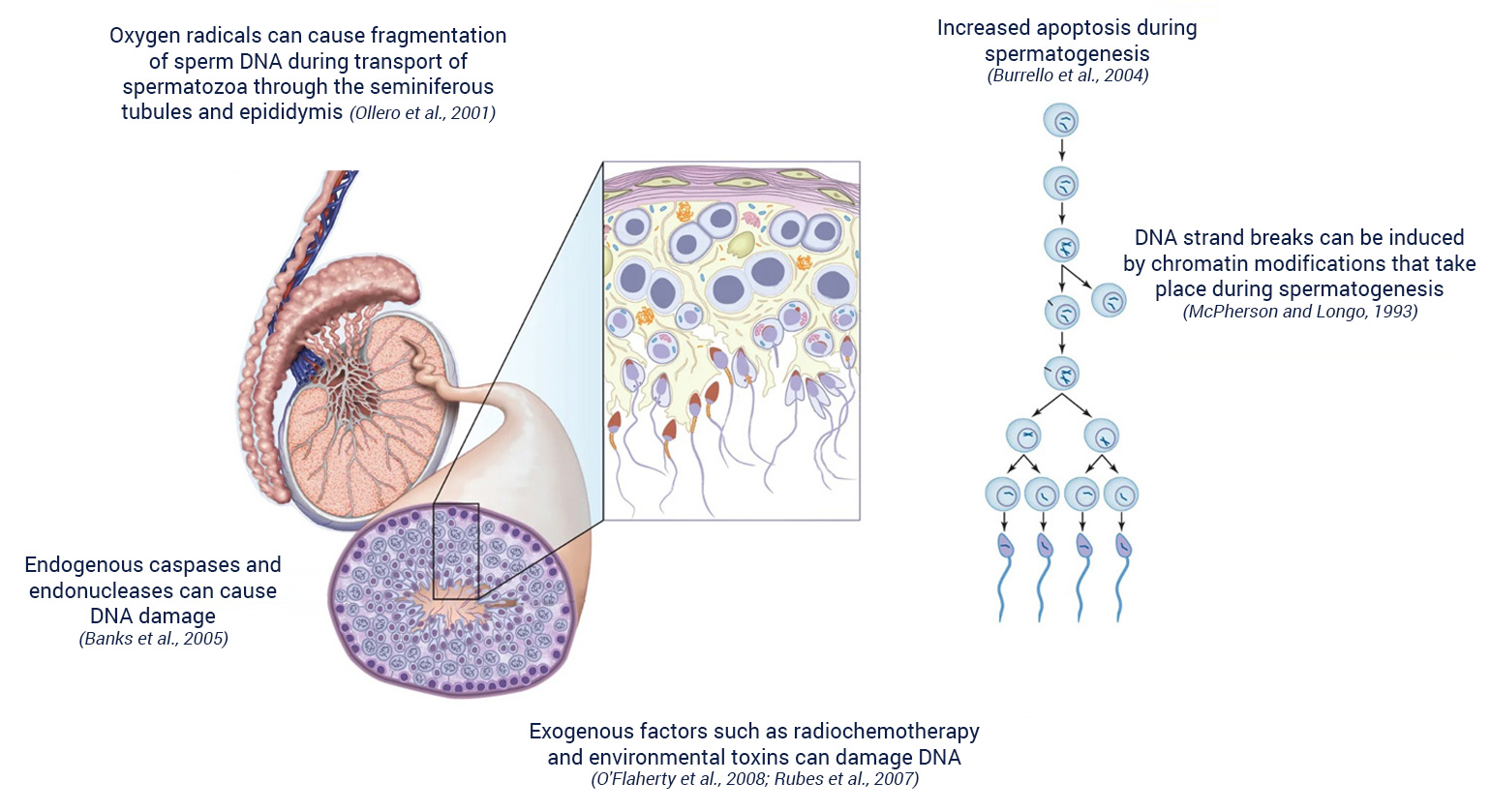
Sperm DNA damage can result from five different pathogenic mechanisms (Perrin et al., 2011; Sakkas and Alvarez, 2010).
What is the SCSA test?
The SCSA® test measures:
DFI (DNA Fragmentation Index) :
DNA Fragmentation Index (%DFI) is the measure of sperm DNA fragmentation and an indicator of sperm quality
HDS (High DNA Stainability Cells): Percentage of sperm with abnormal core proteins and chromatin structures (immature spermatozoa)
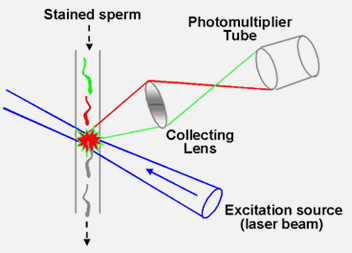
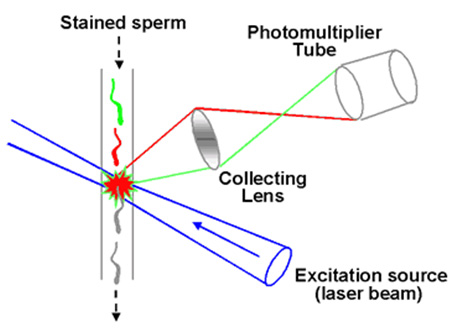
The SCSA® test is performed using a laser-based device called a flow-cytometer which measures 250 sperm/second. The test result is based on the measurment of around 10,000 sperm.
Indications?
SCREENING TEST : Particularly suitable for couples with a long-awaited desire to have children
UNSUCCESSFUL IUI/IVF/ICSI ATTEMPTS
REPEATED MISSORS
POOR EMBRYO DEVELOPMENT AND QUALITY
UNEXPLAINED BARRENESS: Couples who want to have children and have unremarkable diagnostic tests
MEN PRONE TO HIGH OXIDATIVE STRESS:- > 40 YEARS
- STRESSING LIFESTYLE
- SMOKER
- DIABETIC
- CHRONIC DISEASES
- EXPOSURE TO TOXINS
- TAKING PRESCRIPTION MEDICATIONS
- PAST CANCER TREATMENTS
- ABNORMAL SPERM GRAPH FINDINGS
- ANDROLOGICAL DISEASES
- PAST UROGENITAL INFECTIONS
- VARICOCELE (varicose veins in the scrotum)
How is DNA fragmentation measured and how accurate is the test?
The SCSA® test is performed using a laser-based device called a flow cytometer. Essentially, the flow cytometer measures 250 sperm/s with high precision and provides a statistically robust result based on data from 2x 5000 sperm per sample. The precision of flow cytometry coupled with the precise biochemistry of the SCSA test enables highly accurate measurements of sperm chromatin and DNA integrity.
The cells are stained with a fluorescent DNA dye (acridine orange) and forced through a glass channel in a liquid suspension. When the cells pass the laser beam, the laser light causes the dye to emit fluorescent light of a specific color.
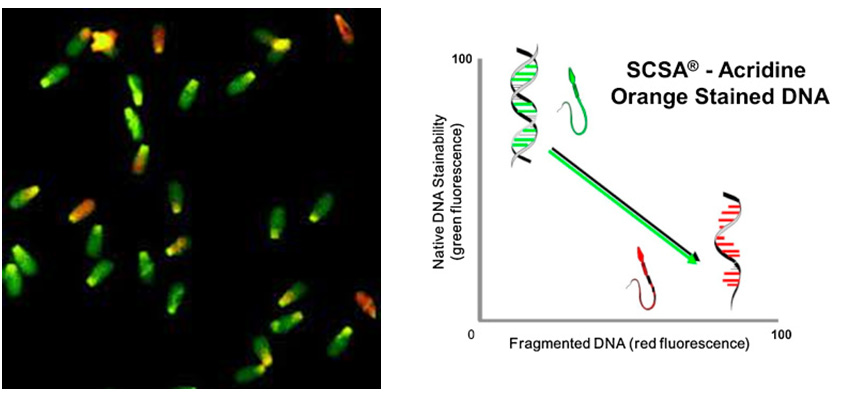
In the SCSA® test, due to the unique nature of the Acridine Orange dye, sperm that emit green fluorescence have undetectable levels of fragmented DNA, while sperm that emit yellow to red florescence have moderate to high levels of fragmented DNA.
What problem(s)/knowledge gap does the SCSA test address?
Male fertility is traditionally examined using sperm tests (spermograms) that record sperm concentration, motility and morphology. However, numerous studies over the last half century clearly show that these parameters do not predict pregnancy, since fertile and infertile men have overlapping values (with the exception of azoospermia). The classic spermiograms are light microscopic measurements of external sperm factors, while the SCSA test measures the internal core factors that cannot be measured using the light microscope.
What data can be collected using the SCSA test?
- The extent of ss and ds DNA strand breaks (DFI)
- The extent of exchange of nuclear somatic histones for sperm-specific protamines (HDS)
- Interpretation of 1st and 2nd
- Indicator of general male health
- Effects of noxae (dose) on fertility
How do I send semen samples to SCSA?
The SCSA test is a highly accurate test that requires a flow cytometer that is inaccessible to most fertility clinics due to high capital costs and a trained staff. Therefore, semen samples collected from you or a patient’s home can be cryopreserved natively.
You can inform us by e-mail about a desired transport. We will then send you a pre-cooled dryshipper; the semen samples are stored and sent back to our laboratory.
The SCSA report will be available to you via a secure WEB site approximately 4 business days after the sample arrives at our laboratory.
Instructions for collecting, processing and sending the seed samples
Collection and processing of the samples:
It should be obtained after 24-48 hours of abstinence by masturbating in sterile plastic sample containers. After liquefaction (liquefaction) of the sample, the sperm concentration, motility and morphology are determined. Write down the parameters on the consignment note.
The sperm concentration must not fall below 500,000/ml . Otherwise, inconclusive results may occur.
Cryopreservation should take place no more than 1 hour after delivery , since the DFI can be falsified after a longer waiting period.
Cryopreservation of the samples:
Samples should be frozen as soon as possible after liquefaction to minimize exposure to air, which can cause damage caused by reactive oxygen species.
Prepare 2 cryovials (1-2mL vials): Label with patient’s name and date of sample collection.
Flash freezing :
Pipette 0.25mL or more of the liquefied native ejaculate into each cryovial.
Cryoprotectants is not required!
Place the tightly closed vials in an upright position in the supplied metal holder and place this directly in the pre-cooled cryogenic container. The container must be closed quickly.
The Dryshipper is closed with the supplied cable tie and placed in the plastic container, to which the dispatch note is attached so that it is clearly visible.
Note: If the sperm concentration is sufficient, less than 0.5 ml (two 0.25 ml aliquots) of ejaculate may be sufficient for the SCSA® test. To perform the test we need two 0.20mL aliquots with a concentration >0.5M/mL.
Please contact our laboratory if you have any questions about the required volume of a sample of a specific concentration.
Sending the samples:
We ship a pre-chilled dryshipper. Dryshippers store the liquid nitrogen in a kind of “sponge” inside the container and thus ensure the safe transport of your cryopreserved samples in the nitrogen gas phase. The low temperature in the container can be maintained for 7 days. It is therefore important to send it back as soon as possible using the shipping label provided.
In the space between the dryshipper and the shipping box is an envelope with a cable tie and an ampoule holder. It also contains a shipping label and a corresponding sleeve that must be attached to the container for return shipping.
The inside of the dryshipper is very cold (-196°C). To avoid frostbite, you must wear gloves when touching anything that is in the dryshipper.
How do I interpret a SCSA finding?
The SCSA test divides spermatozoa into five populations:
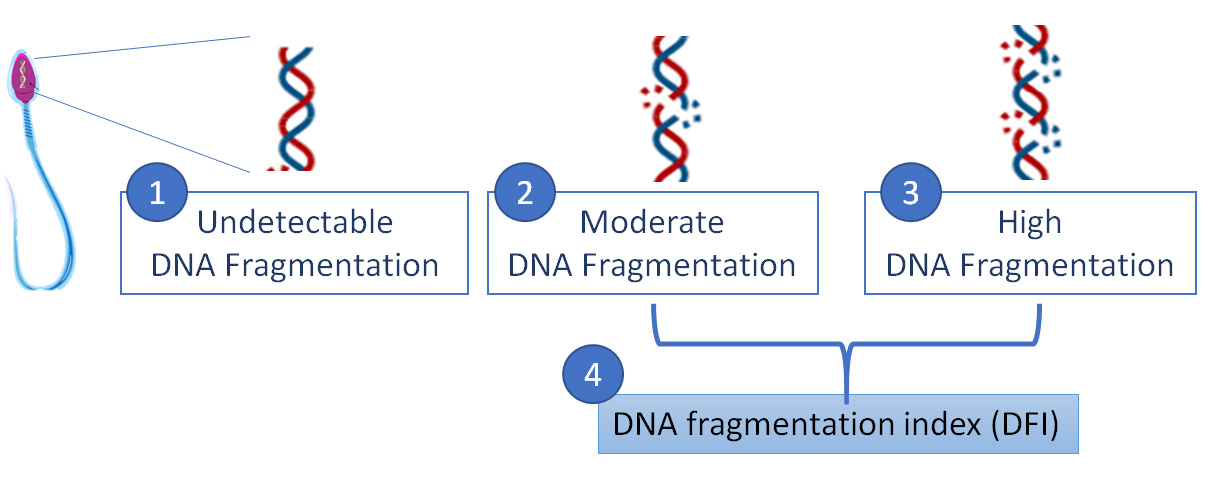

Percentage of sperm with immature chromatin. HDS sperm exhibit less chromatin condensation, resulting in increased DNA stainability. Some studies have shown that if the %HDS is over 36%, no pregnancy has occurred (Menezo).
The DPI values are divided into four statistical categories and can provide the following forecasts:
< 15% DFI = very good to good pregnancy results
> 15% to < 25% DFI = Good to moderate pregnancy outcomes
> 25% to < 40% DFI = Moderate to poor pregnancy outcomes
40% DFI = Very poor pregnancy outcomes
All data are to be understood without maternal influencing factors.
Furthermore, the finding shows a graphical representation of the %DFI (DNA Fragmentation Index) and the %HDS (High DNA Stainability)
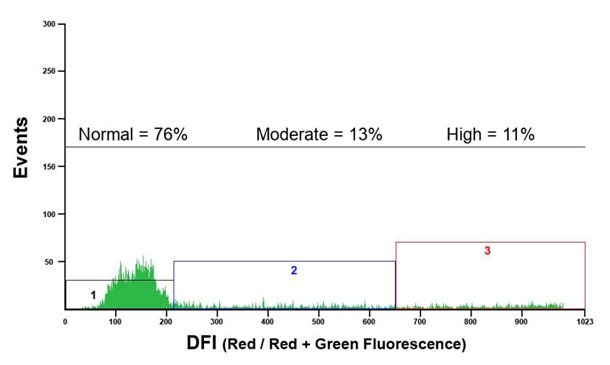
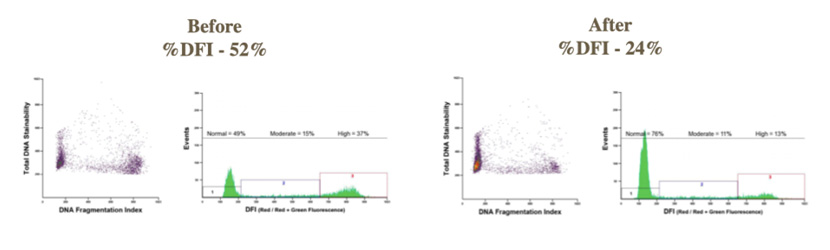
The graph shows that 76% of the measured sperm show no DNA fragmentation and 24% show moderate-high DNA fragmentation (DFI = 24%). It is possible to conceive naturally or with the help of an IUI.
Current data shows that the probability of a successful pregnancy is significantly lower when the proportion of sperm with fragmented DNA is > 25%. However, a DFI > 25% does not rule out pregnancy. The 25% threshold is a statistical threshold. If a man has a constant DFI of >25%, he is placed in a statistical group that has been shown in clinical trials to take longer to achieve natural pregnancy and more IVF cycles. An increased rate of spontaneous abortions is associated with this or pregnancy does not occur at all.
What does a normal finding look like?
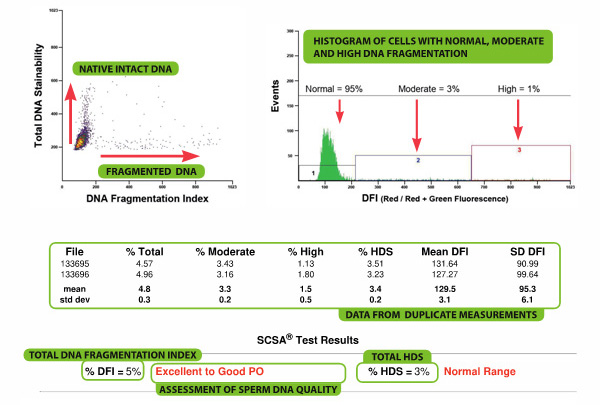
Assessing sperm DNA quality
Since DFI and HDS are within the normal range, pregnancy is possible naturally or by insemination (ignoring partner factors affecting fertility)
That means the DNA of the sperm shows a high stability
What does an abnormal finding look like?
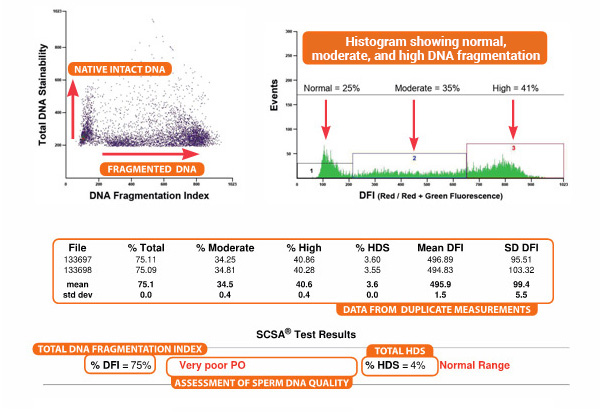
The DFI is greatly increased. This means that the sperm DNA is very fragile and tends towards DNA fragmentation
Stabilization of DNA can be achieved by:
- Medical intervention
- Change of lifestyle
It may be necessary to switch from IUI to IVF/ICSI to increase the chances of a positive pregnancy outcome
What treatment recommendations are based on the SCSA finding?
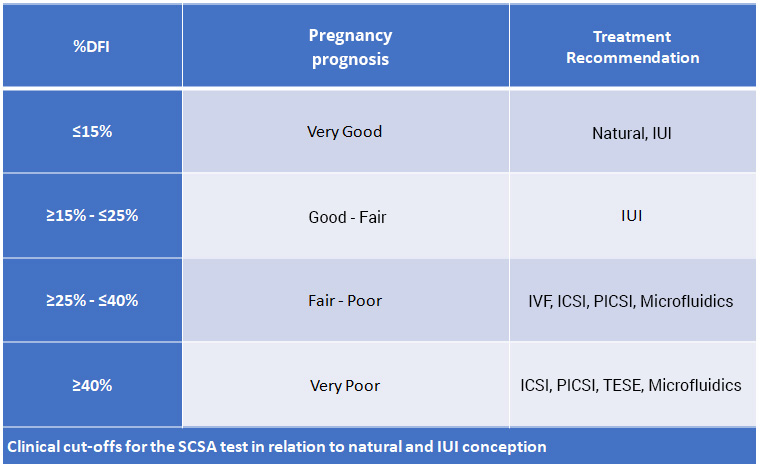
How is the SCSA result used for treatment planning?
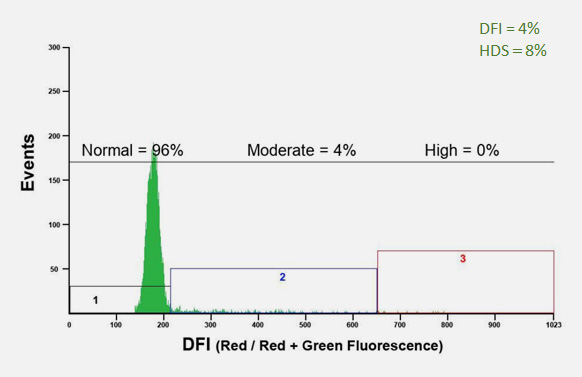
The histogram shows the DFI (DNA Fragmentation Index) measured in a semen sample.
DFI scores are classified into four statistical categories and can predict the following (ignoring partner factors affecting fertility):
< 15% DFI = Very good to good pregnancy outcomes
> 15% to < 25% DFI = Good to moderate pregnancy outcomes
> > 25% to < 40% DFI = Moderate to poor pregnancy outcomes
> 40% DFI = Very bad outcome of pregnancy
If the %DFI is above 25%, the current literature recommends:
- Improving DNA fragmentation through medical intervention
- Improve DPI through lifestyle changes
- switch to IVF/ICSI to increase the likelihood of a positive pregnancy outcome
Can the oocyte repair sperm DNA fragmentation?
The ovum is believed to be able to repair some level of DNA damage.
Moderate to high levels of DNA fragmentation (DFI) found in the red fluorescent sperm likely exceed the egg’s DNA repair capacity.
Marcos Mesequer et al. found that after egg retrieval, every 10% increase in DFI increased the odds of not getting pregnant by a factor of 1.31. In comparison, this effect was not observed when using donor oocytes, which indicates the higher repair capacity with regard to DNA fragmentation of young oocytes.
What are the options for reducing DNA fragmentation?
If the %DFI is high, we recommend:
- Referral to a nutritionist
- Referral to an andrologist
- Examination:
- lifestyle
- chronic diseases
- taking medication
- Exposure to chemicals, pesticides, etc.
Is repeat testing recommended for patients with high DFI values?
If there is a risk factor, repeat SCSA testing is recommended 3 months after risk factor removal/correction to assess impact.
Examples:
Nicotine abstinence (84 days later):
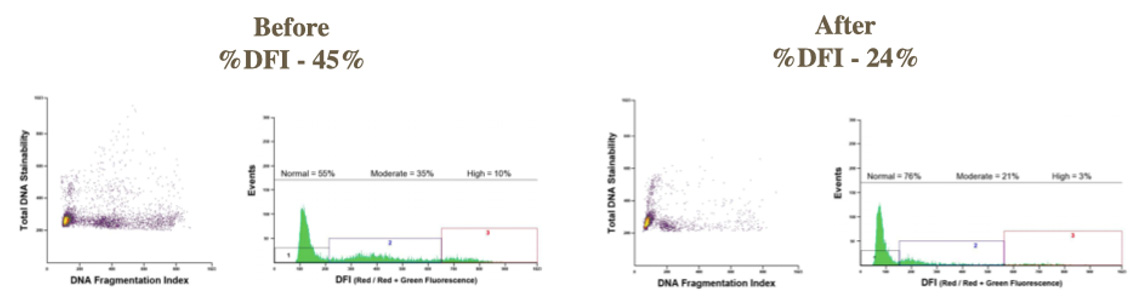
Varicocele surgery (3 months later):
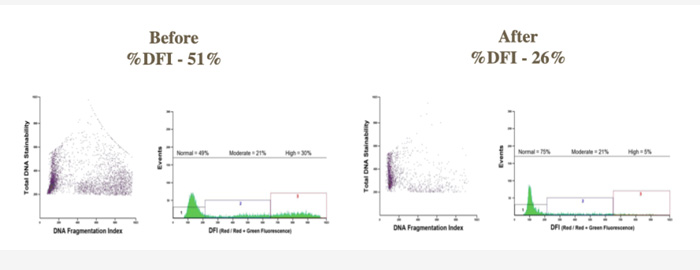
Cessation of pesticide exposure (3 months later):
Why SCSA?
- Gold standard test for sperm DNA fragmentation
- More than 25 years of experience
- More than 40,000 samples analyzed
- Extensive research in different countries
- The most standardized test
- No variability between international laboratories (objective)
- Robust and comparable results
- 10,000 analyzed sperm per sample – more accurate representation of the semen sample
- Use of a small molecule dye that has better access to sperm chromatin compared to other tests that work with larger proteins.
- Each test is quality checked internally and externally
- Internationally standardized test
How much does the test cost?
Please contact us regarding the cost of the test.
Sending your samples to our laboratory is free of charge.
For DFI values >30%, we offer you a second free control test, which should normally take place 3 months after the first test.
Do you have questions about the SCSA® test?
We advise patients and clinics personally – confidential and without obligation.