
Cancer often causes temporary to permanent infertility. It is assumed that both the disease itself and the drug therapies used damage sperm DNA and increase the DFI level. Therefore, semen samples are generally collected and cryopreserved as soon as possible after diagnosis. However, semen quality is often impaired prior to therapy. Therefore, the question often arises as to whether the sperm DNA is of higher quality in the sample before treatment or in the sample after recovery.
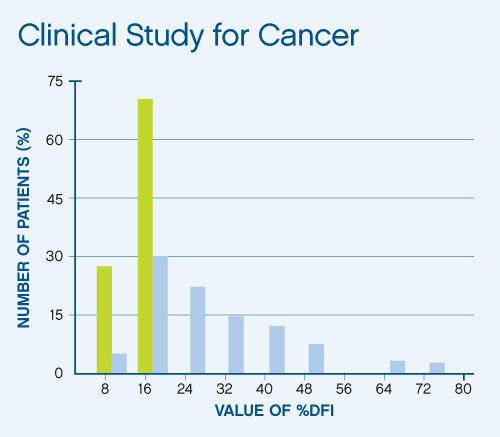
Distribution of individual %DFI values. Green bars: 18 samples from healthy sperm donors; grey bars: 39 semen samples from patients with testicular cancer after unilateral orchiectomy, before further treatment (Fossa et al. 1997).
Clinical Trial for Cancer
In general, men with good DNA integrity before chemotherapy have better recovery of DNA integrity after chemotherapy compared to poor DNA integrity as a starting point. Patients with diseases of the testis, Hodgkin’s, non-Hodgkin’s lymphoma and other neoplasms (abnormal growth = tumor) were evaluated using the SCSA test. The results showed that the group of cancer patients showed significantly higher levels of DNA damage than the donors who were proven to be fertile (Kobayashi et al. 2001).
In another study, the sperm of six men with acute lymphoblastic leukemia were analyzed for DNA fragmentation 10 to 52 months after completing therapy. All test subjects showed relatively low DNA fragmentation. After treatment, one patient fathered a normal child and a second child with multiple congenital anomalies, followed by a second normal child (Evenson et al. 1984).
Testicular cancer patients were evaluated by SCSA after unilateral orchiectomy (removal of a testicle) but before treatment. Twenty-three of the 39 patients showed abnormal DNA fragmentation during pretreatment.
After treatment with radiotherapy or chemotherapy (19 patients), recovery of spermatogenesis was observed in 4 out of 5 patients, with recovery occurring predominantly in those patients with normal DNA fragmentation during pretreatment. (Fossa et al. 1997).